
 By
By Podcasting has become one of the most popular and effective ways to reach audiences, with millions of podcasts covering virtually every topic imaginable. Whether you’re starting a podcast to share your expertise, tell a compelling story, or connect with your audience, creating high-quality, engaging content is essential to building a loyal listener base.
Podcast production involves much more than simply recording audio—it requires careful planning, scripting, editing, and promoting. In this blog post, we’ll explore the essential elements of podcast production and share tips and tools that will help you create professional-sounding and engaging podcast episodes.
1. Planning Your Podcast Content:
Before you dive into the technical aspects of podcast production, it’s important to plan your content. A strong podcast starts with a clear vision, a compelling theme, and a well-thought-out strategy.
Define Your Niche and Audience:
One of the first steps in planning your podcast is identifying your niche and audience. What topics will you cover? Who are your ideal listeners? Understanding your target audience will guide your content creation and ensure that you are producing episodes that resonate with your listeners.
Create a Content Calendar:
Consistency is key in podcasting. To keep your listeners engaged, create a content calendar that outlines your podcast episode topics, release schedule, and any special episodes or interviews. Having a plan helps you stay organized and ensures that you are delivering fresh, relevant content on a regular basis.
Craft Compelling Episode Ideas:
Each episode should have a clear purpose and value for your listeners. Whether you’re interviewing an expert, discussing a specific topic, or telling a personal story, make sure each episode provides something valuable to your audience. Consider adding segments like Q&A sessions, listener feedback, or tips and tricks to keep things dynamic.
2. Recording Your Podcast:
The quality of your podcast’s audio is critical to its success. Poor audio quality can turn off listeners and make your content hard to follow. To ensure that your podcast sounds professional, invest in the right equipment and follow best practices for recording.
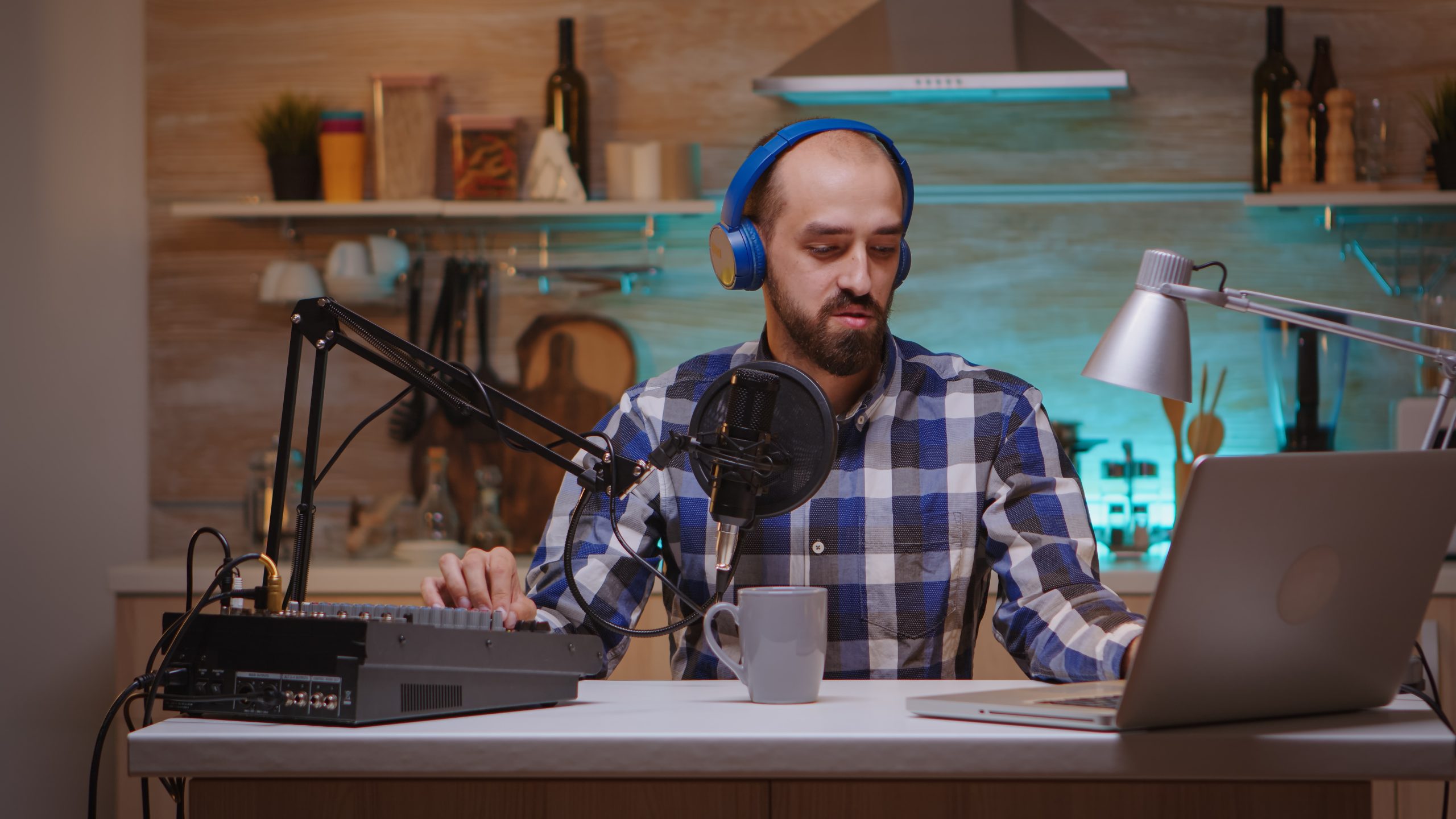
Essential Equipment for Podcasting:
While you don’t need an expensive setup to get started, investing in the right equipment can make a big difference in the quality of your podcast.
Microphone: A high-quality microphone is essential for clear, crisp audio. Popular options for beginners include the Blue Yeti and the Audio-Technica ATR2100x.
Headphones: Use closed-back headphones to monitor your audio while recording. This ensures that you can hear any unwanted background noise and make adjustments.
Pop Filter: A pop filter helps reduce plosive sounds (like “p” and “b”) that can distort audio.
Audio Interface: If you’re using an XLR microphone, you’ll need an audio interface like the Focusrite Scarlett 2i2 to connect your mic to your computer.
Choose the Right Recording Environment:
Recording in a quiet, controlled environment is essential for high-quality audio. Avoid recording in rooms with lots of echo or background noise. If you don’t have access to a soundproof studio, you can use blankets, pillows, and rugs to absorb sound.
Recording Software:
There are many recording software options available for podcasters. Some of the most popular tools include:
Audacity: A free, open-source audio editing software with powerful recording and editing features.
GarageBand: A user-friendly option for Mac users that offers robust podcasting features.
Adobe Audition: A professional-grade audio editing tool with advanced features for podcasters.
3. Editing Your Podcast:
Once you’ve recorded your podcast, it’s time to edit the audio. Editing is where the magic happens, as it allows you to remove mistakes, eliminate pauses, and improve the overall flow of your episode.
Edit for Clarity and Brevity:
Listen to your recording and remove any unnecessary sections. Trim out long pauses, filler words (like “um” and “uh”), and any tangents that don’t add value to the episode. Aim for a tight, engaging episode that keeps listeners interested from start to finish.
Add Intro/Outro Music and Sound Effects:
Including an intro and outro can make your podcast sound more polished and professional. You can find royalty-free music on sites like Epidemic Sound or Artlist. Adding sound effects like a subtle jingle or applause can also enhance the overall listening experience.
Use Editing Software:
Editing your podcast is easier with the right software. Some popular podcast editing tools include:
Audacity (free).
Adobe Audition (paid).
Reaper (paid with a free trial).
These tools allow you to cut, splice, and adjust audio tracks, as well as apply effects and normalize volume levels.
4. Publishing and Promoting Your Podcast:
Once your podcast is edited, it’s time to publish and promote it to your audience.
Choose a Hosting Platform:
A podcast hosting platform is where you’ll upload your episodes for distribution. Some popular podcast hosting services include:
Buzzsprout.
Libsyn.
Anchor.
These platforms distribute your podcast to major directories like Apple Podcasts, Spotify, and Google Podcasts.
Promote Your Podcast:
To grow your audience, it’s essential to promote your podcast across multiple channels:
Social Media: Share episodes on platforms like Instagram, Twitter, and LinkedIn. Use relevant hashtags and encourage listeners to share their thoughts.
Website: Create a dedicated website for your podcast where listeners can access show notes, links, and resources.
Email Newsletter: Build an email list and send out updates about new episodes, behind-the-scenes content, and exclusive offers.
5. Engaging Your Audience:
To keep your listeners coming back, engage with them directly. Respond to listener questions, read feedback on air, and encourage audience participation through social media, email, or voice messages.
Consider creating a community around your podcast, such as a private Facebook group or Discord channel, where listeners can connect, share ideas, and discuss episodes.
Conclusion:
Podcast production is a combination of creativity, technical know-how, and effective communication. By using the right tools, creating compelling content, and focusing on high-quality production, you can build an engaging podcast that resonates with your audience. Whether you’re just starting or looking to take your podcast to the next level, mastering the art of podcast production is key to creating lasting, impactful content.