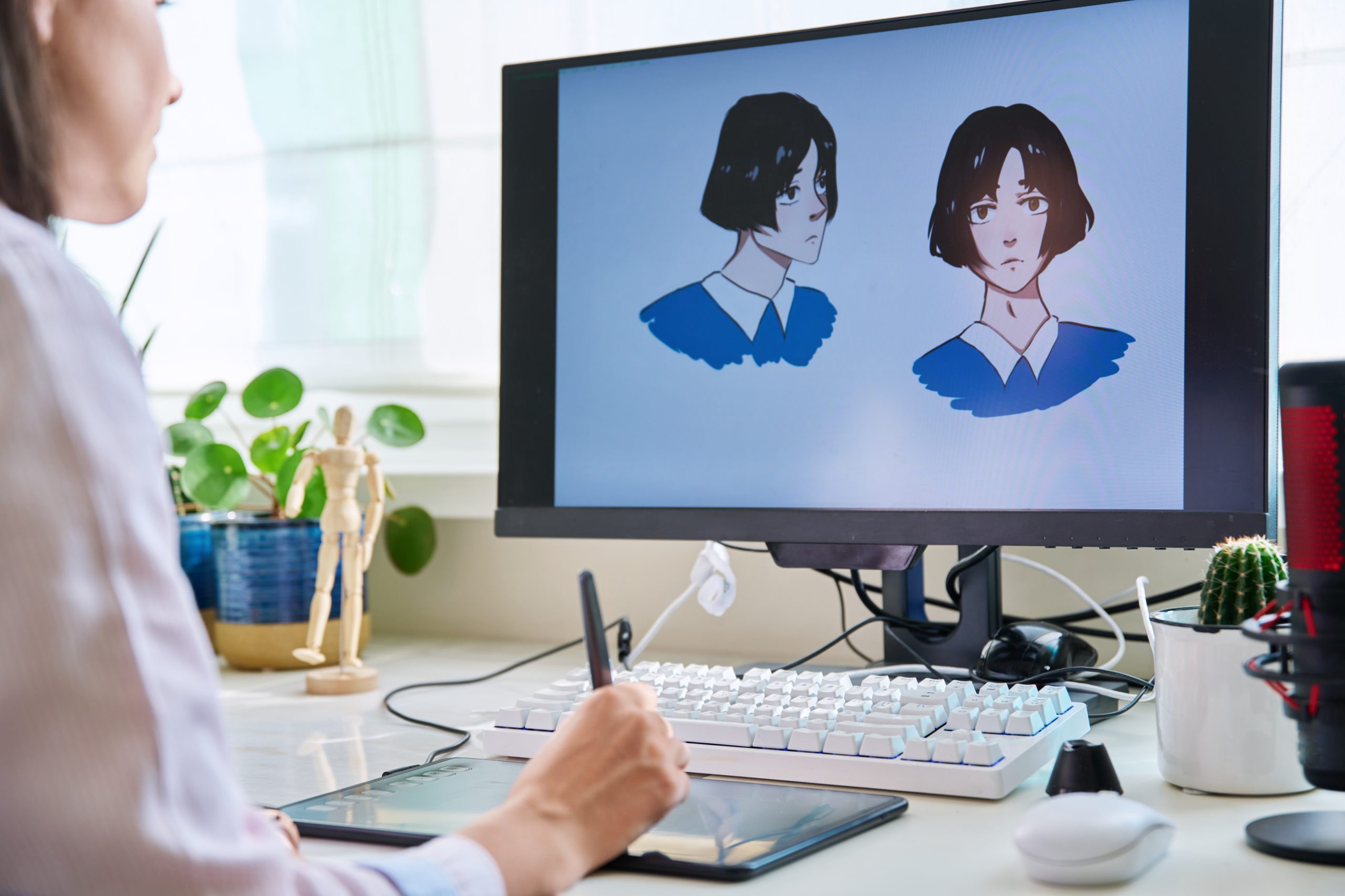
 By
By In just a few years, artificial intelligence (AI) has evolved from a background concept in technology labs to a creative powerhouse reshaping the world of art. What began as simple algorithms that mimicked brushstrokes or generated basic sketches has now grown into full-fledged AI image tools capable of transforming imagination into reality—producing intricate, lifelike, and emotionally resonant artworks in mere seconds.
By 2025, AI-powered art creation is no longer a novelty—it’s a movement. Artists, designers, photographers, and hobbyists alike are leveraging these tools to experiment, collaborate, and redefine creativity. From generating surreal dreamscapes to restoring damaged artwork, AI is breaking creative barriers and changing the way digital art is imagined, produced, and shared.
1. The Evolution of Digital Art Through AI:
Digital art has always embraced technology—from early computer-generated graphics in the 1980s to the explosion of Photoshop and digital tablets in the 2000s. Yet, the arrival of AI image tools marks an even bigger leap.
Instead of manually manipulating pixels or brushes, artists can now collaborate with algorithms. By describing a concept in words (“a cyberpunk cityscape at dusk, painted in watercolor style”) or uploading a sketch, the AI interprets and visualizes the idea. The result: an instant digital masterpiece that merges human imagination with machine precision.
What once required days of sketching and rendering can now be done in minutes—giving creators more time to refine, ideate, and experiment.
2. How AI Image Tools Work: From Prompt to Picture:
Modern AI art tools operate using machine learning models trained on millions of images and artistic styles. These models learn to recognize shapes, colors, patterns, and artistic techniques, allowing them to generate new visuals that mirror human creativity.
The Process in Action:
Input – The artist provides a prompt (“a futuristic samurai in neon armor under cherry blossoms”) or a reference image.
Interpretation – The AI breaks down the prompt into visual elements—subjects, styles, moods, and textures.
Generation – Using diffusion models (like those powering tools such as Midjourney and Stable Diffusion), the AI gradually builds the image from random noise until a coherent artwork emerges.
Refinement – Artists can edit, upscale, or modify results by adding style keywords (“oil painting,” “3D render,” “Baroque realism”) or adjusting parameters like color tone or composition.
This interactive process allows creators to blend artistic intuition with algorithmic exploration—something that has never been possible in traditional workflows.
3. The Democratization of Creativity:
One of the most profound impacts of AI image tools is that they have democratized art creation.
Before AI, creating high-quality digital art required years of technical training or expensive software. Now, anyone—whether a professional illustrator or someone with no art background—can visualize their ideas instantly.
Platforms like Midjourney, Adobe Firefly, DALL·E, and Leonardo.Ai allow users to describe what they imagine and watch it come to life. This accessibility means creativity is no longer restricted by skill level—it’s only limited by imagination.
For instance, a small business owner can generate professional-grade social media visuals, a writer can visualize a fantasy world for their novel, or a teacher can create educational illustrations—all without needing a graphic designer.
AI tools have turned creativity into a collaborative experience, not an exclusive talent.
4. The Role of Artists in the AI Era:
Contrary to fears that AI might replace artists, the technology is instead redefining their role.
AI doesn’t eliminate the need for creativity—it enhances it. Artists are using these tools as co-creators, exploring new artistic frontiers that would be impossible through manual methods alone.
For example:
Concept Artists use AI to quickly visualize multiple design variations before refining the final version.
Digital Painters use AI-generated textures, lighting references, or color palettes to enhance realism.
Photographers use AI to blend images, alter moods, or simulate styles like impressionism or noir.
NFT Artists integrate AI outputs into blockchain art collections, combining data, emotion, and interactivity.
The human element remains essential: AI may generate the visuals, but it’s the artist’s eye that gives them soul, context, and meaning.
5. Popular AI Tools Transforming Digital Art:
Several AI platforms have risen to prominence, each offering unique features and artistic capabilities:
1. Midjourney:
Famous for its painterly, stylized results, Midjourney produces visually stunning, imaginative art. Artists love its depth, texture, and ethereal tone.
2. Adobe Firefly:
Tailored for professionals, Firefly integrates directly with Photoshop and Illustrator, offering generative fills, object creation, and style transfers. Its biggest draw is commercial safety—it’s trained on licensed datasets, ensuring copyright protection.
3. DALL·E 3 (OpenAI):
DALL·E interprets natural language prompts with high accuracy, creating realistic or surreal images seamlessly. It’s perfect for product design, editorial illustrations, and concept visualization.
4. Stable Diffusion:
An open-source favorite, Stable Diffusion empowers artists to fine-tune models, create custom styles, and experiment locally. It’s the foundation for many AI art tools today.
5. Leonardo.Ai:
An intuitive platform built for designers and gamers, Leonardo focuses on stylized art, character design, and 3D-like environments.
Each of these tools represents a step forward in visual collaboration between humans and machines, expanding what’s possible in digital art.
6. How AI Is Transforming Artistic Workflows:
AI tools are fundamentally changing how artists ideate, create, and deliver. Here’s how:
• Faster Concept Development:
Artists can generate dozens of concepts for a single idea in minutes—ideal for game design, film storyboarding, or branding projects.
• Inspiration and Experimentation:
AI serves as a creative partner, sparking new directions when artists face creative blocks. A simple tweak to a prompt can lead to a completely different aesthetic.
• Style Exploration:
Want to see your portrait rendered as Van Gogh or Studio Ghibli? AI allows endless stylistic experimentation—perfect for learning or inspiration.
• Enhanced Production Efficiency:
AI tools streamline repetitive or technical tasks such as background removal, color correction, or lighting adjustments. Artists can focus on concept and storytelling, not manual labor.
• Cross-Medium Creativity:
AI art doesn’t stop at images. Artists can now blend image generation with 3D modeling, video animation, and AR/VR environments—creating immersive multimedia experiences.
7. Ethical and Creative Challenges:
Despite its promise, AI-generated art also raises ethical and creative questions that the industry continues to debate:
• Copyright and Ownership:
Who owns AI-generated art—the user, the developer, or the dataset it was trained on? Legal frameworks are still catching up. Many artists call for transparent datasets and attribution policies.
• Authenticity and Value:
As AI art floods online platforms, distinguishing between human and machine-made work becomes difficult. Some worry it could devalue traditional art forms.
• Bias in AI Models:
AI systems can unintentionally reproduce stereotypes or biases present in their training data. Artists and developers are pushing for inclusive datasets and ethical model design.
• Creative Over-Reliance:
If used carelessly, AI might encourage formulaic creation—where prompts replace imagination. Successful artists use AI as a tool, not a substitute for vision and originality.
These challenges highlight the importance of human oversight and ethical artistry in the AI era.
8. The Future of AI and Digital Art:
The next generation of AI tools promises even more integration, personalization, and collaboration. Expect to see:
Interactive AI co-creation, where artists and machines refine art together in real time.
Multimodal creativity, blending image, sound, and motion to produce living art.
Personalized AI models, trained on individual artists’ styles to help them scale their unique creative identity.
Generative 3D art, enabling designers to create virtual worlds instantly for games and VR.
Ethical AI ecosystems, where datasets are transparent and artists are credited for inspiration sources.
In short, the line between imagination and creation will continue to blur—making creativity more immersive, intuitive, and limitless.
9. Conclusion: A New Renaissance of Creativity:
AI image tools are ushering in a new renaissance of digital art—one where creativity is boundless, collaboration is seamless, and imagination truly has no limits.
From students sketching their first concept to professionals designing cinematic universes, AI empowers everyone to express their ideas visually. It’s not replacing artists—it’s expanding the canvas of human creativity.
As we stand at this intersection of art and technology, one thing is clear: the future of digital art belongs to those who embrace innovation without losing the essence of imagination.
Because when humans and AI create together, the result isn’t just art—it’s a vision made real.