
 By
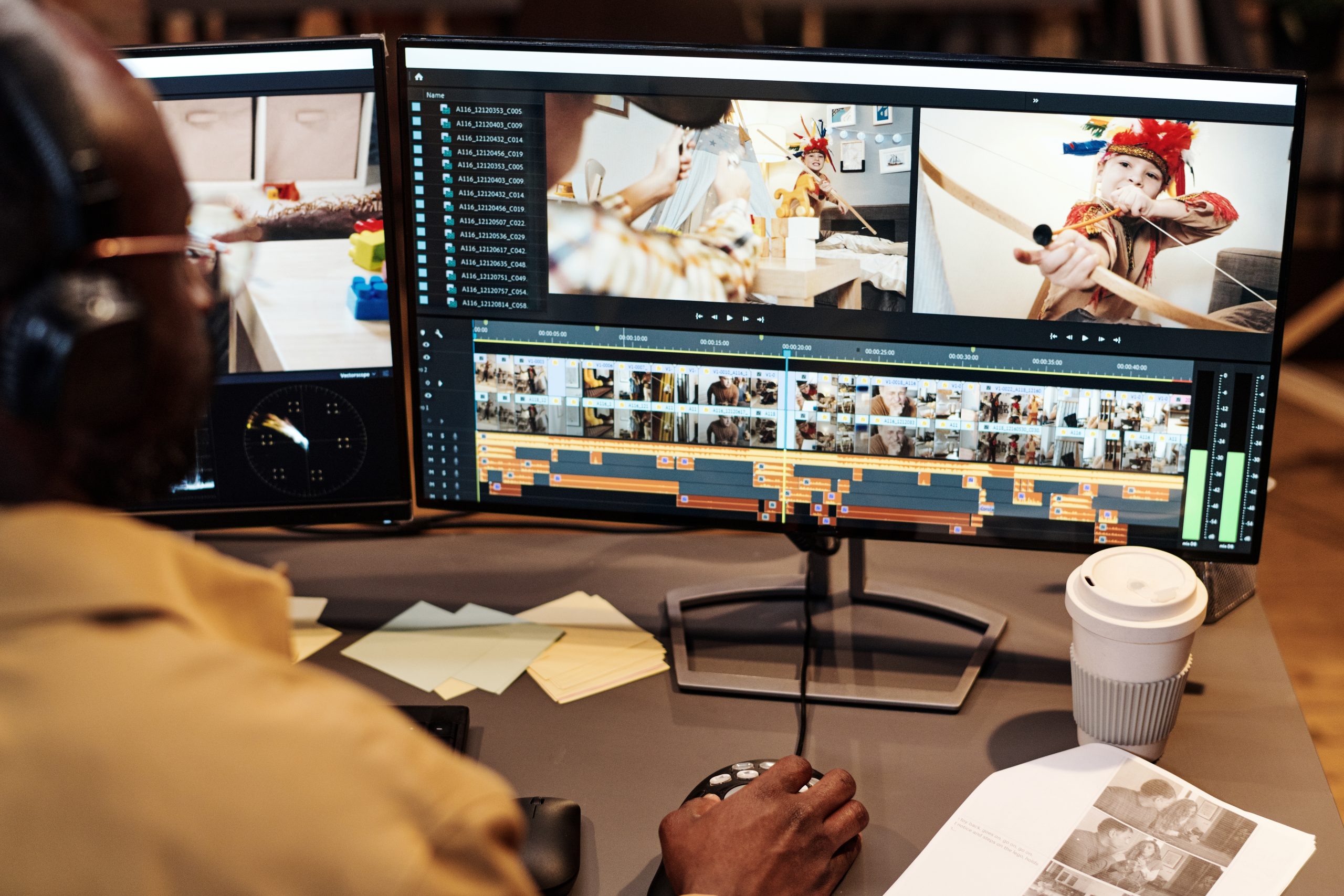
By In the fast‑paced world of visual storytelling, turning an idea into a polished video used to be a complex, time‑consuming journey—storyboarding, shooting, editing, colour grading, audio mixing, exporting for multiple formats. But in 2025, thanks to the rapid advances in artificial intelligence (AI), that journey is shrinking dramatically. From script to screen, AI is making video production faster, smarter, and more accessible than ever.
In this article, we’ll explore how AI is transforming video editing and production workflows, what the key capabilities and benefits are, share some of the standout tools you should know, and offer best practices for integrating AI into your production process.
Why AI Matters in Video Production:
Several factors make this moment significant:
Efficiency & speed: AI tools are handling many repetitive and labour‑intensive editing tasks—scene detection, auto‑cropping, audio cleanup, caption generation—freeing creators to focus on story and craft. For example, one article notes that some AI tools “speed up tedious tasks, improve quality, and unlock new creative options.” RedShark News
Lower technical barriers: Creators who aren’t professional editors can now access powerful features (auto‑reframe, colour correction, voice enhancement) that previously required specialist software or training.
Scalability and iteration: With AI, you can more easily create multiple versions (for YouTube, Instagram, TikTok), repurpose content, experiment with styles—and iterate faster.
Creative augmentation: Rather than replacing human creativity, AI is becoming a collaborator—suggesting edits, trimming filler, recognizing key moments, letting creators focus on narrative, design, motion.
New possibilities in production: AI is enabling completely new workflows—from script to storyboard to rough edit to final. For instance, AI video generation models now exist where you enter text or prompts and get moving visual outputs. Wikipedia+1
Given your background in design, animation, branding and visual storytelling, this shift is especially powerful: you can spend less time wrestling with software and more time shaping narrative, visuals and motion, while AI handles the groundwork.
How AI is Changing the Workflow: Script → Footage → Edit → Publish:
Let’s break down the workflow and highlight where AI is having the greatest impact.
1. Script & Pre‑Production:
While AI’s strongest gains are in editing, production is also changing. Some platforms use AI to generate storyboard suggestions or even rough visuals based on script outlines. For instance, text‑to‑video models now exist that generate visual scenes from a prompt. Wikipedia+1
Before you shoot or edit, AI can help you plan: what kind of shots, pacing, graphics you’ll need. That means fewer wasted takes and more focused footage.
2. Footage Ingestion & Scene Detection:
Once footage is captured, AI steps in to analyse it. Key features include:
Scene detection: Recognising cuts and camera changes automatically. RedShark News
Auto tagging and organisation: Helping you find clips by text description (e.g., “close‑up of hands working”). Remarkably, one tool enables search for “close‑ups of hands working in a kitchen”. The Verge
Auto reframing / aspect ratio adjustment: Changing shot composition for mobile, social formats. In one review: “auto reframe … intelligently adjusts aspect ratios for different social platforms.” RedShark News
3. Editing & Enhancement:
This is where AI makes the biggest visible difference:
Auto‑trimming & filler removal: AI identifies and removes filler words (“um”, “ah”), dead space. Tools like Riverside allow editing via transcript—delete words, the video updates automatically. Riverside
Colour grading & motion/enhancement: AI applies mood corrections, stabilises shaky footage, enhances visuals. One article highlights AI tools delivering useful results in 2025 for professional editors. RedShark News
Audio clean‑up & voice‑overs: AI removes background noise, matches lip‑sync for generated voices, even generates voice from text.
Generative visual tools & extensions: For example, Adobe Premiere Pro 25.2 introduces “Generative Extend” to extend clips and ambient audio, powered by AI. The Verge
Subtitle/caption automation & translation: AI generates transcripts, captions, and even translates into multiple languages, enabling global reach.
4. Export & Multi‑Format Delivery:
AI helps you adapt the same content for multiple formats swiftly: 16:9 for YouTube, 9:16 for mobile, 1:1 for social. Brand assets (colours, fonts, logos) can be applied automatically. Tools like Canva’s AI video editor allow automatic background removal, animation, prompt‑based creation. Canva
5. Feedback, Analytics & Iteration:
Post‑production isn’t the end. AI tools can analyse performance: which shots resonate, which cuts hold attention, which visuals cause drop‑off. By feeding performance data back into editing decisions, creators refine faster, build better content.
Standout Tools for 2025:
Here are some of the most relevant AI‑powered video editing/production tools worth knowing:
Adobe Premiere Pro / After Effects with Sensei: These professional tools embed AI features like Generative Extend, scene detection, auto‑reframe, colour pipeline. RedShark News+1
Canva AI Video Editor: Accessible, user‑friendly, good for social content — prompt‑based, brand‑kit integration, auto animations. Canva
Riverside AI Video Editor: Focused on creators and remote production—text‑based editing via transcript, audio‑visual enhancements, multi‑format export. Riverside
Runway Gen‑4: A formidable generative video model (text‑to‑video/image‑to‑video) enabling creative, shortest‑form production. Wikipedia+1
Meta AI / Edits App: Consumer‑facing – allows users to apply AI prompts to video (e.g., change background, transform style) directly in mobile app. About Facebook+1
Each tool targets different needs—from high‑end production to social clips to entirely new visuals generated from prompts.
Best Practices: Getting the Most from AI Video Workflows:
To maximise the benefits while avoiding pitfalls, here are key practices:
Start with story and intent: Even if AI handles editing, you still need a clear script or storyboard. Define your key message, audience, tone, and platform.
Use high‑quality input footage: AI can enhance visuals, but starting with clean, well‑captured footage always helps results.
Leverage brand assets & consistency: Upload your logo, fonts, colours. Use templates for intro/outro. Ensure content stays on‑brand even if AI automates many steps.
Review and refine—the human touch matters: AI suggestions are highly useful—but they’re not perfect. Check transitions, narrative pacing, tone, motion.
Ensure multi‑format readiness: Use AI tools that can generate variants for mobile, social, long‑form and use templates to keep workflow efficient.
Maintain ethical and authenticity standards: With generative tools, be cautious of misleading visuals, deepfake risks or content that doesn’t align with brand truth.
Track performance and iterate: Use analytics to monitor engagement, drop‑off points, watch time. Feed insights back into next production cycle.
Balance creativity with automation: Don’t let AI make everything generic. Use AI to handle grunt work, but preserve your creative voice in visuals, motion, branding.
Challenges & Considerations:
AI doesn’t solve everything—some challenges remain:
Quality vs speed trade‑off: Some AI‑generated clips may still lack polish compared to full custom production. You may need to invest time in refinement.
Creative differentiation: As these tools become widespread, you’ll still need unique style or brand voice to stand out.
Ethical and legal issues: Generative models raise questions about copyright, likeness rights, deepfakes, attribution.
Technical limitations: Some tools work better with short clips or specific formats; longer‑form narrative still may require traditional workflows.
Human oversight is vital: AI is a tool—not a replacement for human craft. Storytelling, design, motion, editing judgement still rest with creators.
The Future: What’s Next in AI Video Production:
Looking ahead:
Longer‑form generative video: Models will increasingly support multi‑scene narrative, closing the gap between short clips and full video.
Interactive and immersive content: AI will enable branching narratives, VR/AR integration, adaptive video experiences.
Deeper integration into editing suites: As Adobe, Blackmagic, DaVinci resolve integrate more AI, the workflow becomes seamless—“edit while AI works behind the scenes”.
Agentic AI assistants: Tools that act like editing assistants—make suggestions, manage media, propose cuts, help with versioning.
Globalisation & localisation built‑in: Auto‑translate, lip‑sync, regional versions—all via AI—as part of production pipeline.
Ethical frameworks & watermarking: As generated video becomes common, platforms and tools will embed watermarking or metadata to ensure authenticity.
Conclusion:
From script to screen, AI is revolutionising how videos are made. What used to take days, teams and technical expertise is now accessible, faster and more iterative. For creatives, agencies, educators and storytellers—including you with your design and branding background—this is an opportunity to re‑think production workflows: use AI to handle the heavy‑lifting, and invest your time in story, motion, visuals, experience.